Basic Shape Outline Set: A Designer’s Review
As an embroidery designer who frequently sources assets for both custom client orders and my own Etsy shop, I approach every new download with a critical eye. We have all experienced the disappointment of a digital file that looks perfect on screen but unravels into a bird's nest or puckered mess once the needle hits the fabric. Recently, I evaluated the Basic Shape Outline Set from Creative Fabrica to determine if these fundamental geometric forms could truly hold up in a professional production environment. This review breaks down my experience testing these designs for real-world applications, specifically focusing on their utility for school-related projects, custom apparel, and commercial merchandise.
First Impressions and Visual Versatility
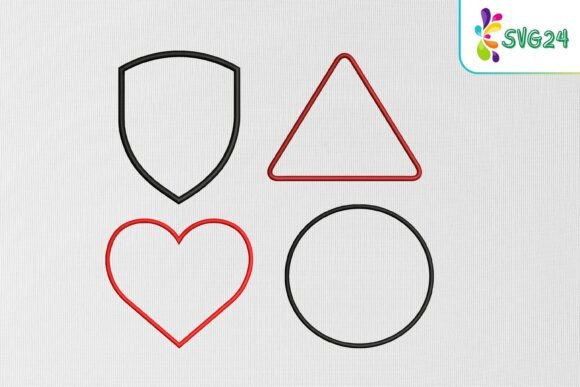
The Basic Shape Outline Set includes four essential silhouettes: a shield, triangle, heart, and circle. At first glance, the appeal is obvious. In an industry often saturated with overly complex, high-stitch-count designs, there is a refreshing elegance in clean lines. The visual mood is minimalist and modern, making it an excellent foundation for branding. For those of us creating school spirit wear or academic gifts, the shield outline immediately suggests varsity jackets and crests, while the circle and triangle offer neutral frames for monograms or logos.
What stood out during my initial assessment was the "stitching personality." These are not merely digitized vector lines; they appear to be structured as proper machine embroidery design elements intended for stability. The outlines possess enough presence to stand alone as decorative motifs but remain open enough to serve as containers for text or smaller icons. This duality is crucial for designers who need design assets that can adapt across multiple product categories without looking repetitive.
Performance on Apparel and Textiles
I tested this set with a specific project in mind: a run of canvas tote bags and cotton sweatshirts for a local school fundraiser. When working with tote bag design, structural integrity is paramount. Canvas is unforgiving; if a design is too dense, it creates a bulletproof patch that ruins the drape of the bag. If it is too sparse, it gets lost in the weave. The Basic Shape Outline Set performed exceptionally well here. The stitch density was balanced, providing crisp definition without excessive perforation that could weaken the fabric.
For sweatshirt embroidery, the challenge shifts to stretch and recovery. Fleece and French terry fabrics require designs that move with the garment. Because these shapes are primarily outline-based rather than heavy fill stitch areas, they maintained the softness of the sweatshirt. There was no stiff backing feeling against the skin, which is a major selling point for customers seeking comfortable, wearable art. However, when testing on darker fabrics, I noted that thread color contrast is vital. A white running stitch on navy fleece popped beautifully, but lighter pastel threads required a second pass or a heavier weight thread to achieve the same visual impact.
Technical Considerations for Small Hoops and Details
One of the most common questions I receive from fellow creators concerns resizing. Can you shrink a shape down for a baby bib or cap without losing detail? With the Basic Shape Outline Set, the answer depends heavily on your machine and stabilizer choice. During my tests on curved cap surfaces, the circle and heart outlines held their registration surprisingly well. Caps are notorious for pushing fabric out of alignment, but because these designs lack complex internal layering, the risk of misalignment was minimal.
However, users must be cautious with tiny lettering inside these shapes. While the shapes themselves scale down effectively for small hoop size applications like patches or pocket logos, adding 4mm text inside a resized 2-inch heart requires precision. I recommend using a specialized stabilizer such as tear-away for caps or cut-away for stretchy knits to ensure the outline remains smooth. Always inspect small details after stitching; sometimes, what looks like a continuous line on screen can become dashed or uneven if scaled below the recommended minimums. Always verify the specific dimensions provided in the embroidery file metadata before committing to a bulk order.
Commercial Viability and Product Value
For Etsy sellers and small business owners, time is money. Digitizing simple shapes from scratch takes valuable hours away from marketing and fulfillment. Having a reliable library of base shapes allows for rapid prototyping. I found that using the Basic Shape Outline Set significantly reduced my turnaround time for custom quotes. Instead of digitizing a new frame for every client request, I could pull up these pre-tested files and focus my creative energy on the personalization aspects.
This efficiency translates directly to product value. Clean, professional outlines signal quality to buyers. A jagged or poorly optimized shape screams "amateur," whereas these elegant stitches convey boutique-level attention to detail. Furthermore, these shapes are ideal for creating printable mockup templates. Because the geometry is standard, you can easily create digital previews for clients to approve before you ever thread a needle. This reduces waste and increases buyer trust, as they can visualize the final handmade product accurately.
Practical Notes for Creative Entrepreneurs
If you are considering adding this set to your Creative Fabrica embroidery library, keep these practical tips in mind to maximize your success:
- Test on Scrap Fabric First: Never assume a setting will work universally. Test the shield outline on denim, cotton, and fleece separately to dial in tension.
- Check Licensing: Before selling finished items featuring these shapes, always review the specific license terms on the product page. Ensure you have the rights for commercial embroidery use.
- Layering Strategy: These outlines pair beautifully with applique design techniques. Use the circle outline as a placement line for fabric appliques to add texture without increasing stitch count.
- Thread Weight Matters: For a bolder look on towels or blankets, consider using 30-weight thread. For delicate nursery decor or lightweight shirts, stick to standard 40-weight or even 60-weight for finer lines.
- File Verification: Confirm the file formats included match your machine brand. While most sets include DST, PES, JEF, and EXP, it is best practice to verify compatibility before purchase.
Elevating Handmade Gifts and Brand Consistency
Beyond commercial sales, the Basic Shape Outline Set shines in the realm of personalized gift creation. There is a timeless quality to a simple heart outline on a baby blanket or a shield on a graduation keepsake. These shapes do not compete with the sentiment; they enhance it. For makers focusing on nursery decor or wedding accessories, the neutrality of the triangle and circle allows for sophisticated color palettes that won't clash with existing room aesthetics or bridal themes.
Brand consistency is another hidden benefit. By using the same foundational shapes across different product lines—matching the circle on a mug cozy to the circle on a tote bag—you create a cohesive visual identity. Customers begin to recognize your style. This recognition builds loyalty and distinguishes your shop in a crowded marketplace. The digital embroidery file becomes more than just a stitch pattern; it becomes a component of your brand architecture.
Final Thoughts for the Professional Maker
In my professional evaluation, the Basic Shape Outline Set proves to be a worthy investment for serious embroiderers. It avoids the pitfalls of trendy, fleeting designs in favor of enduring utility. Whether you are producing custom apparel for a school team, crafting an embroidered patch series, or simply need reliable frames for monogramming, this set delivers consistent results. The key to success lies in respecting the technical requirements of each fabric type and leveraging the simplicity of the design to highlight your craftsmanship.
Remember that even the best design assets require operator skill. Take the time to understand how these outlines interact with your specific materials. Check your stitch density settings, experiment with different thread colors, and utilize proper stabilization. When executed correctly, these basic shapes provide the polished, professional finish that turns a simple craft project into a premium retail product. For designers seeking versatility and reliability in their digital library, this set earns its place in the rotation.